
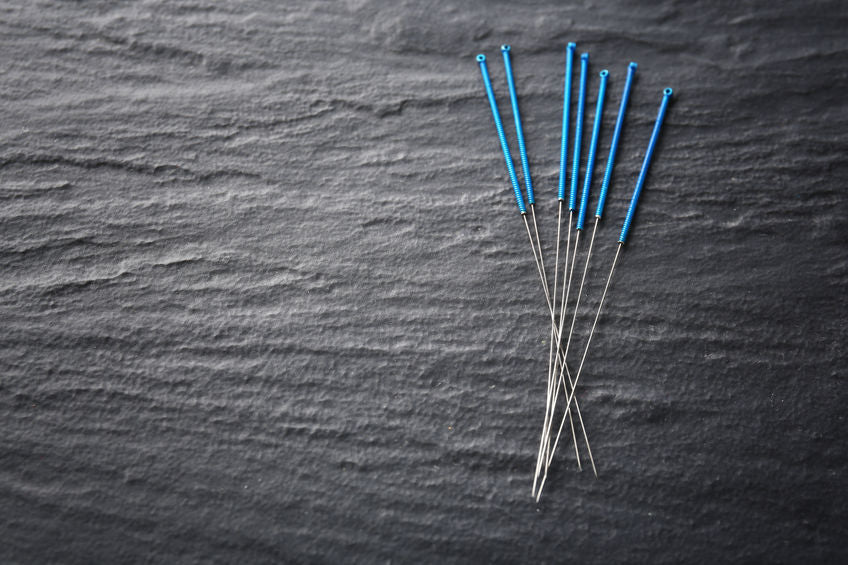
Choosing acupuncture needles can be a personal and tough choice, especially when each needle has its own unique characteristics, from the needle size, handles, coating and more. There is no one size fits all to say the least but in this guide we will be tackling the key factors to consider when choosing acupuncture needles, so that you can have a better idea on what suits your practice best.
What Should You Consider Before Buying Acupuncture Needles?
There are 3 important factors to consider when choosing acupuncture needles, the size, coating and the handle size. After those three, you can consider more factors and features to improve your workflow.
Needle Size
When deciding on acupuncture needles, you will have to pick a length and diameter. They are usually measured either in millimeters or cun ( a traditional chinese unit of measurement )
- Length refers to how long the needles are and the depth it can safely reach. The longer the needle, the deeper the depth and the opposite is true when it is thinner.
- Diameter, which is also known as gauge, refers to the thickness of the needle. Thinner needles are usually preferred for young and/or sensitive patients as well as for sensitive areas of the body. Meanwhile Thicker needles are preferred for certain techniques and dense body regions.
To decide on your needle size, it will solely depend on the type of treatment and technique. However, you can also discover our general guideline for the recommended sizes for body region in our acupuncture needle guide.
Coated or Non-coated
Another important factor to consider when choosing your needle is the coating. Acupuncture needles come either silicone or non-silicone coated. This directly affects the feel of insertion and the tactile feedback.
Silicone coated acupuncture needles contain a micro layer of silicone, consequently this allows a smoother insertion due to lesser friction upon insertion. Meanwhile, non-silicone coated needles provide greater tactile feedback and more natural friction upon insertion. As a result, this extra feedback allows practitioners to grasp or stimulate the ‘qi’ during treatments. Moreover, with non-silicone coated needles, they are ideal when combining treatments with electroacupuncture and moxibustion. However if combining these treatments with silicone coated needles, it's important to note the interaction may differ.
Chinese Loop Handles or Korean Spring Handles
Acupuncture needles come in a variety of handle types. However, for now we will tackle the 2 most popular handle types:
-
Chinese Loop Handles
Chinese Loop Handles are tightly coiled wires wrapped around the needle shaft with a distinctive loop at the tip. These handles are commonly made from copper, aluminum, or gold, which also makes them great for conductivity and heat related treatments. Many practitioners choose Chinese loop handles for their tactile feedback and ease of needle manipulation, making them well suited for more traditional acupuncture techniques.
Overall: Chinese Loop Handles are great for practitioners that frequently perform manual needle manipulation and/or combine treatments with electroacupuncture or moxibustion. -
Korean Spring Handles
Korean Spring Handles use a coiled spring handle that is mechanically fixed onto the needle shaft, similar to a crimp to ensure a tight hold onto the actual needle. As a result, the spring handles are lightweight and flexible. Many practitioners prefer Korean spring handles because they are lightweight and well suited for quick insertions and high-volume treatments.
Compared to Chinese Loop Handles however, Spring handles may feel more elastic but they offer slightly less feedback during manipulation and technique.
Overall : Korean Spring handles are ideal for faster and consistent treatments with a lightweight feel.
Other Factors to help enhance your workflow
While needle size, coating, and handle style affect how a needle performs. Other factors such as quantity and packaging formats affect a practitioner's workflow and efficiency. Below, we’ve highlighted 2 particular factors that practitioners also widely consider before picking their needles.
Quantity Formats
Nowadays, acupuncture needles come in different quantity formats to accommodate the needle volume per treatment as well as technique.
At Lierre, we offer 3 quantity format options:
- 10 Bulk - 10 needles with one single guide tube per blister or pack. These usually come in boxes of 1000. This is a popular choice for practitioners who regularly use multiple needles in their treatment and also looking for an eco-friendly way to reduce packaging waste.
-
5 Bulk - 5 needles with a single guidetube per blister or pack, they come in either boxes of 500 or 1000. This format is well suited for practitioners who require a moderate number of needles per treatment.
Individuals - the classic format, packaged with one needle and one guide tube.
Tip: We recommend combining needle formats to get the right amount of needles you need for treatment. For example, our Shinlin Brand carries all 3 needle formats. If you need 11 needles, you can use a Shinlin 10 Bulk pack plus 1 individual needle. If you need 7 needles, you can combine a 5 Bulk pack with 2 individual needles.
This gives you the exact number of needles you need while helping reduce waste.
Packaging Formats
Acupuncture Needles are most commonly packaged in Blister Packs but easy-tear plastic sachets have also become popular as of late. Both formats maintain the same level of sterility and safety. However, they do make a difference in opening preferences and feel.
Blister Packs
These are plastic packages with a slight indent in the front and a special paper backing at the back. This type of packaging is the most familiar amongst practitioners and usually appreciated for its sturdy design.
Easy Tear-Away Sachets
The easy tear away sachets are slim plastic sachets that feature a pre-cut tear notch which allows the package to be opened swiftly with minimal effort. This type of packaging is preferred for its speed and convenience.
Now, which acupuncture needle should you buy?
While there isn’t a single acupuncture needle that can fit for all treatments, the right choice will depend on how you measure the mentioned factors and how you can find a balance in them during your treatments.
As a general guideline,
- Choose thinner needles for sensitive areas or patients.
- Choose silicone-coated needles for smoother insertion.
- Choose non-coated needles if tactile feedback is important to your technique.
- Choose Chinese loop handles if you frequently perform manual manipulation, electroacupuncture, or moxibustion.
- Choose Korean spring handles if you prefer quick, consistent insertions and a lightweight feel.
- Select the packaging format that best matches the number of needles you typically use during each treatment.
If you're still unsure, the best way to find what suits you practice is actively trying different needle styles and techniques until you find the right balance.
Finally, our recommendations:
For Korean-style stainless-steel spring handle needles, discover ShinLin, available in multi-needle formats with a wide variety of sizes.
For copper handles or specialized needles, discover Acu Relaxo
For non-silicone coated needles, compatible with TENs and moxibustion, discover Lierre Basic, Lierre Plus+ or Lierre Golden Needles.