
No. Nebulizing diffusers are designed to use pure essential oils without water. Adding water may affect the diffuser’s performance or damage the device.
Ultrasonic vs Nebulizing Diffuser :
What's the difference?
Understanding Essential Oil Diffusers
Essential Oil diffusers now come in a variety of types and each of them are designed to disperse aroma in a unique way. While both are used to diffuse essential oils, they all slightly differ in the way they operate. In this page, we’ll give you a short comprehensive guide on the key difference so you can choose the best diffuser for your space.
How do they work?
Ultrasonic diffusers
An ultrasonic diffuser uses water and ultrasonic vibrations to disperse a fine mist into the air. When a few drops of essential oils are added to the water, the device uses its vibrations to break it into tiny particles, resulting in a light aromatic mist.
Nebulizing Diffusers
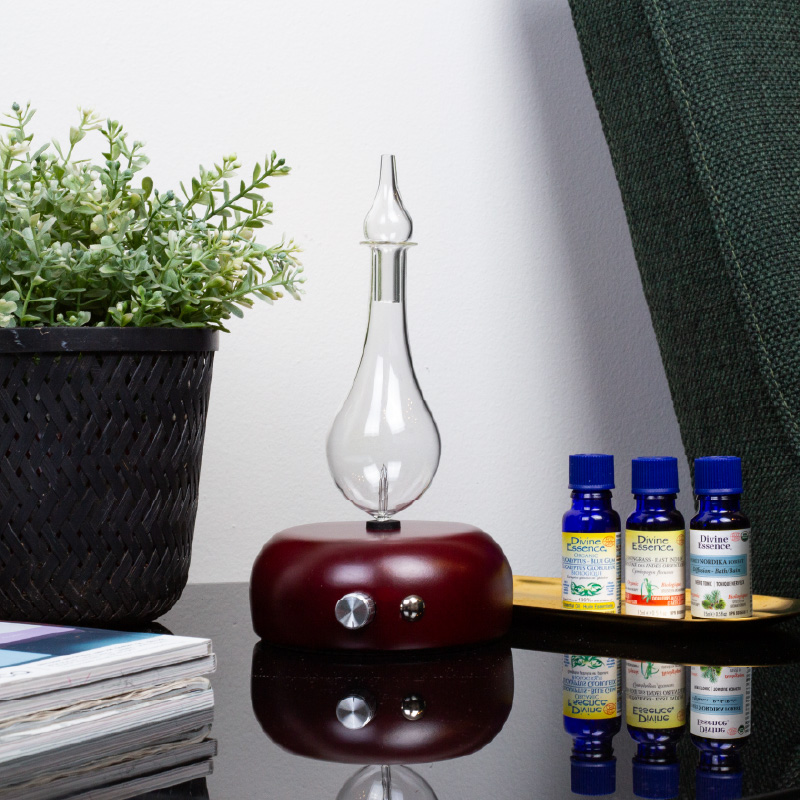
Meanwhile, a nebulizing diffuser does not rely on either water or heat. Instead, it uses pressurized air to break essential oils into fine particles, then dispersing them directly into the air in a more concentrated form.
The key |  |  |
|---|---|---|
| Feature | Ultrasonic | Nebulizing |
| Uses Water | Yes | No |
| Oil concentration | Diluted | Pure |
| Scent strength | Light – moderate | Strong |
| Humidity | Adds moisture | Almost none |
| Noise Level | Quiet | Slight hum, low to medium |
| Maintenance | Easy | Cleaned with 70% alcohol only, twice a month |
| Oil Usage | Typically 4–10 drops mixed with water | Typically 15 drops of pure essential oil in an hour |
| Diffusion Time | 8–12 hours | Maximum length to run is 10 minutes, 1-3 times a day |
| Best for | Bedrooms, small spaces, daily use | Clinics, larger rooms, stronger diffusion |
| Cons | Risk of mold or moldy smell if not cleaned or maintained properly | Oil residue buildup if not maintained |
Frequently asked questions (FAQ)
Can you use water in a nebulizing diffuser?
Can diffusers stain walls or surfaces?
When used properly, diffusers generally should not stain walls or surfaces. However, over time, some residue may accumulate depending on the type of diffuser, water quality, and essential oils used.
Ultrasonic diffusers may leave light moisture or mineral residue when used with hard water, while nebulizing diffusers may leave slight oily residue since they disperse pure essential oils. Placing the diffuser in a well-ventilated area and away from nearby walls or furniture can help minimize buildup.
Can you use fragrance oils in a diffuser?
It is generally recommended to use pure essential oils that are compatible with your diffuser. Certain fragrance oils or thicker oils may leave more residue and could affect the diffuser’s performance over time.
Do nebulizing diffusers make noise?
Nebulizing diffusers may produce a light humming sound due to their air pressure system. Ultrasonic diffusers are generally quieter and are often preferred for bedrooms or nighttime use.
What is the difference between a humidifier and a diffuser?
Humidifiers are primarily designed to add moisture to the air and are commonly used to help with dryness in indoor environments. Diffusers, on the other hand, are designed to disperse essential oils into the air for aromatic purposes.
Some ultrasonic diffusers can also add a light amount of humidity because they use water to create a fine mist. However, they are not intended to replace a full-sized humidifier.